
Keyword Research for Beginners

Introduction:
Keyword research is one of the most important steps in search engine optimisation (SEO). Before creating a blog post, website page, or marketing campaign, it is essential to understand what people are searching for online. By identifying the right keywords, businesses and content creators can attract the right audience, improve search engine rankings, and increase website traffic. Whether you are a beginner blogger, digital marketer, or business owner, learning keyword research can help you build a successful online presence. In this guide, you will learn what keyword research is, why it matters, different types of keywords, topic research methods, competitor analysis, and modern AI-powered research techniques.
What Is Keyword Research?

Why Is Keyword Research Important?
Keyword research plays a major role in SEO success. Benefits include:
Better Search Rankings
Using relevant keywords helps search engines understand your content and display it for related searches.
Increased Organic Traffic
Targeting the right keywords can attract visitors who are actively searching for your content.
Understanding User Intent
Keyword research helps you discover what your audience wants to learn, buy, or explore.
Content Planning
It becomes easier to generate blog ideas and build a content strategy around topics people are already searching for.
Improved Conversion Opportunities
When you target the right audience, visitors are more likely to engage with your content and take action.
Types of Keywords
Understanding keyword types can help you choose the best keywords for your content.
1. Informational Keywords:
Where the person intends to find information.
For example: Benefits of digital marketing
2. Navigational Keywords:
Where the person intends to find a specific website or its page.
For example: Facebook business page
3. Transactional Keywords
Where the person intends to buy or purchase something.
For example: Buy web hosting
4. Commercial Keywords:
Where the person intends to compare different businesses.
For example: Facebook business page
5. Question Keywords:
Where the person intends to find an answer to the question.
For example: What is digital marketing?
6. Geo-specific Keywords:
Where the person intends to find out about the business of a particular location.
For example: the best digital marketing institution in Chandigarh
7. Customer-Defining Keywords:
Where a particular segment is defined.
For example: men's watch, women's shoes.
8. Trending keywords:
Where person searches about trending topics.
How to Conduct Keywords Research
Keyword research helps you discover what your audience searches for the most.
Use Google Keyword Planner:
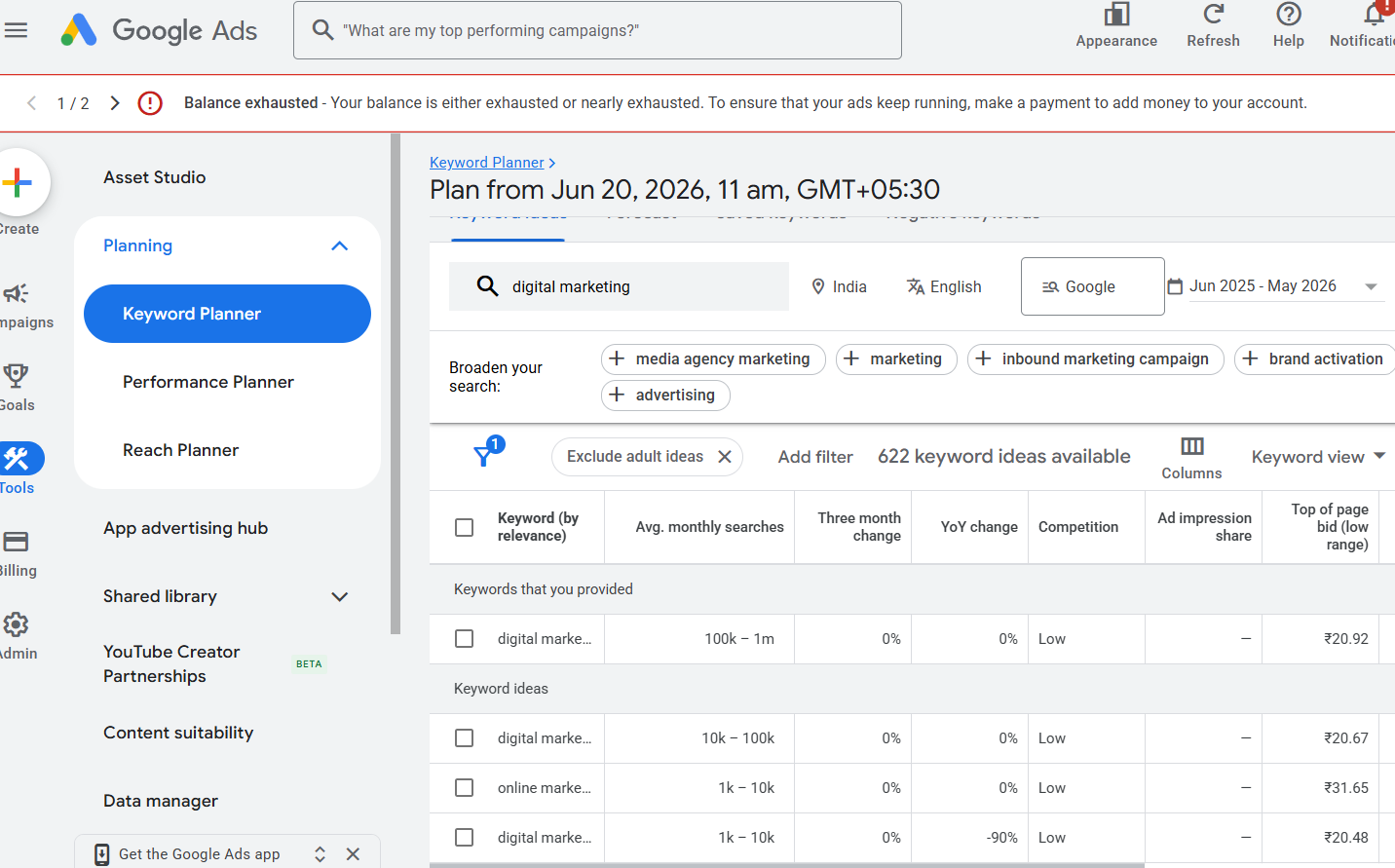
Like this, u can search keywords from the following keyword research tools.
Keyword Tools:
How to Conduct Topic Research
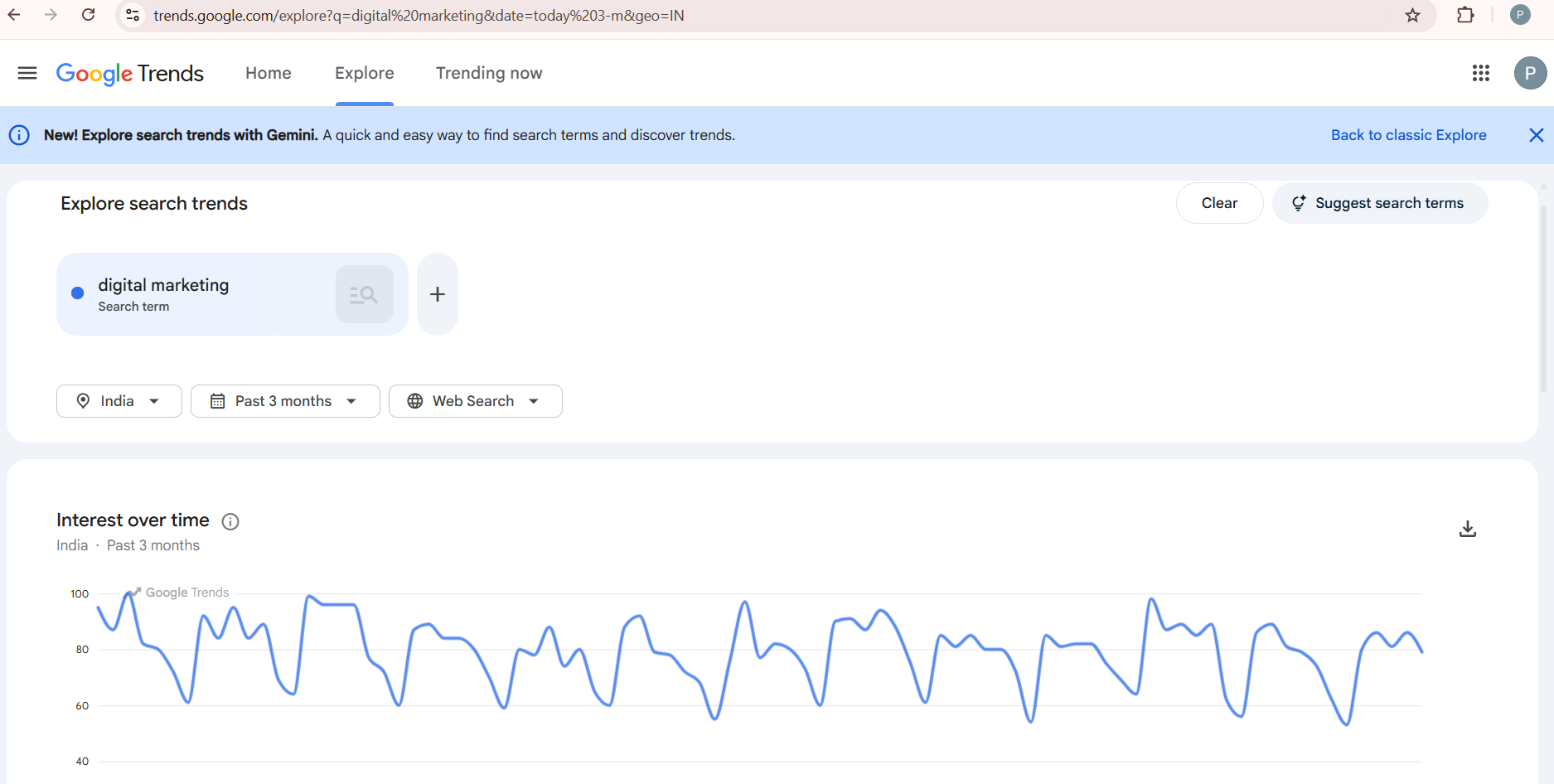
Use Google Suggestions
Start typing a topic into Google and review the suggested searches. For example, entering "keyword research" may generate related ideas that people frequently search for.
Explore Related Searches
Scroll to the bottom of Google search results to find additional topic ideas.These suggestions can help you identify related content opportunities.
Review Online Communities
Forums and discussion platforms often reveal common questions and problems.Pay attention to recurring topics within your niche.
Analyze Social Media Trends
Social media platforms can help identify trending topics and emerging interests.Look for common questions, discussions, and content that receives strong engagement.
Competitor Research
Competitor research is the process of analyzing websites that already rank for your target keywords.This helps you understand what type of content performs well in your niche.
Benefits of Competitor Research
What to Analyze
Understanding Search Intent
Search intent refers to the reason behind a user's search query. Understanding intent helps create content that meets user expectations.
Informational Intent
The user wants information. Example: What is SEO
Navigational Intent
The user wants to find a specific website. Example: WordPress website
Commercial Intent
The user is comparing options before making a decision. Example: Best SEO tools
Transactional Intent
The user intends to complete a purchase or action. Example: Buy a domain name online.
Matching content to search intent can improve rankings and user satisfaction.
AI Prompt Research for Content Ideas
Best Practices for Keyword Research
To achieve better results, follow these proven practices:
Focus on User Intent
Choose keywords that align with what users actually want.
Create Valuable Content
Always prioritise quality and usefulness over keyword density.
Analyze Competitors
Learn from successful content while creating something unique and better.
Update Research Regularly
Search trends and user behavior change over time, so revisit keyword research periodically.
Common Keyword Research Mistakes
Conclusion
Keyword research is the foundation of successful SEO and content marketing. By understanding what people are searching for, businesses and content creators can create valuable content that attracts the right audience.
Whether you are performing topic research, analysing competitors, studying search intent, or using AI tools for idea generation, keyword research helps guide every stage of content creation.
For beginners, focusing on relevant keywords, understanding user intent, and consistently creating high-quality content can significantly improve website visibility and long-term SEO success.
Have questions about SEO or want to share your experience? Drop a comment below — we'd love to hear from you! Share